
Plato, Republic
Plato’s Republic might be called the greatest book on politics, on education, and on justice ever written. As the Divine Comedy embodies the values of the Middle Ages and the Aeneid embodies the ideals and
values of Rome, the Republic embodies the ideals and values of classical Greece. In the dialogue, Socrates raises a supreme question for us in this course: What makes a person happy? To prove that only a just person and, thus, a good person is happy, Socrates leads us to explore the meaning of justice, what sort of political organization can achieve justice, and how we can educate citizens for justice.
This lecture continues the theme of government and justice, especially the moral values that are essential to a good government. The model of Socrates, who insisted that terms be defined, can guide us through the great books.
These qualities include wisdom, justice, courage, and moderation.
- Courage is, of course, essential for those who go to war.
- An individual must have the wisdom to understand the difference between courage exercised in a just war and courage exercised in an unjust war. Without the wisdom to understand that a nation is fighting for justice, courage is nothing more than brutality
- Moderation links the virtues. When any quality—even courage—is carried too far, it becomes unjust.
- Courage, moderation, and wisdom—working together—produce true justice. That is the theme of Plato’s Republic.
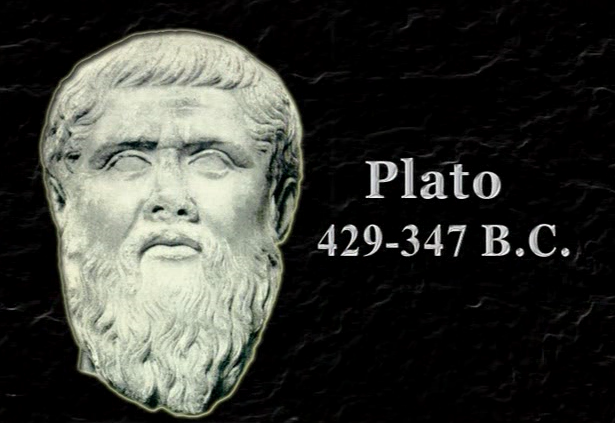
Although Plato is called a philosopher, he was an intellectual. Philosophers, such as Confucius and Socrates, live their wisdom; intellectuals talk about ideas and try, from time to time, to put them into action.
Like The Divine Comedy, Plato’s Republic is a difficult book to read.
Sagesse, Courage, Justice, Moderation
Mathematics is an essential subject for these leaders, because they must keep their eyes fixed on
absolute truth and justice. Numbers and geometry are ways to perfection.
John Stuart Mill, On Liberty
Published in 1859, Mill’s On Liberty is the classic statement of the liberal ideal of democratic government and social justice. This is the philosophical statement of the ideas of government put into effect by
the great British Prime Ministers William Gladstone and Winston Churchill. For Mill, government exists to serve the individual.
Individual liberty is the end of government, not a means to an end. Liberty is defined as the freedom of the individual to live as he or she chooses, unrestrained by government regulations as long as no harm is
done to others. For Mill, the essence of true freedom lies in the individual’s liberty, not in majority rule. Education, justice, economics must all be determined by how well they foster the freedom of the individual.
As a student of Socrates, Plato understood the role of irony. Socrates frequently used irony to make people think.
On Liberty, published in 1859, was one of the culminating points in the life of a great intellectual. The father of John Stuart Mill, James Mill, was closely associated with Jeremy Bentham and the Utilitarian movement. Utilitarianism sought to reform politics in England, to increase the number of English voters, and to create a democracy that rested on the rights of the individual. Utilitarians believed that the purpose of government was to achieve the greatest good for the greatest number of citizens; a government should be of, by, and for the people.
In his Autobiography, Mill says that we should keep growing intellectually throughout our lives. He believed that one of the best ways to shape the mind was to summarize. He wrote works on logic and on political economy.
Confucius believed that few people were capable of being leaders and that they should be educated for that leadership role. The state should tax people in a fair fashion, and people were to live their lives under the beneficent rule of the state.
Machiavelli believed that people existed to serve the state and the leader. The qualities of leadership that Machiavelli described were necessary for the peace and prosperity of a nation. According to Machiavelli, the main goal of the leader should not be to help people but to maintain his power.
Although Socrates and Jesus went against public opinion, their beliefs did not harm people. Mill believed the individual should be free to expound ideas. The state could punish a crime, but not the idea that motivated the crime.
Mill believed that society must be willing to tolerate eccentricity as long as it does not harm others. Mill asks where governmental intervention will stop after it begins.
Mill was opposed to Machiavelli and Plato in his defense of the right of the individual to live exactly as he chooses—in defense of what contemporary Americans view as the ideal today.
Sir Thomas Malory, Morte d’Arthur
In both secular and religious life, love was elevated into a cult. Religious and carnal love, history and myth came together in the literary cycle of King Arthur and the search for the Holy Grail. King Arthur and his Knights of the Round Table, the love of Lancelot and Guinevere, and Sir Galahad and the Grail brought together the themes of chivalry, courtly love, and religious mysticism. Thomas Malory’s Morte d’Arthur captures the passion, consequences, and contradictions of romantic and spiritual love.
The lectures have described a fundamental dichotomy in how great books and great thinkers have approached the question of whether the individual exists to serve the state or whether the state exists to serve the individual.
In the Republic, Plato says that the state exists to serve the individual, to make the individual just, but that the state must exercise control to achieve its aim.
Malory was an English knight who served with distinction in the Hundred Years’ War with France and was elected to Parliament. In 1459, he and a group of fellow knights beat up and robbed some monks. Malory was sentenced to jail, where he died in 1471.
The story is a universal one. Each generation has new movies, new novels, and new comic books about King Arthur. King Arthur embodied the values of the Middle Ages, an era of great religious faith and marked by a code of chivalry and feudalism. King Arthur actually existed. Arturus was a war leader in Britain in the dark days following the collapse of Roman rule, around 500 A.D.
A group of tales about King Arthur was kept alive by Celtic-speaking peoples. These legends began in Wales. Around King Arthur clustered a series of marvelous figures, including the magician Merlin, and wondrous events, including the story of the Holy Grail, an embodiment of salvation, which had been brought to England by Joseph of Arimathea.
Knights come to serve King Arthur at his capital city at Winchester, or Camelot. The knights sit at a round table because everyone is equal. King Arthur weds Guinevere. The knights serve the cause of good.
Lancelot and Guinevere regret all the misfortune their carnal love has caused. Guinevere becomes a nun and Lancelot, a monk, fasting and serving God until Lancelot learns that Guinevere has died. Lancelot can no longer eat or drink, and he wastes away and dies. He is buried by knights who fought beside him.
Johann Wolfgang von Goethe, Faust, Part 1
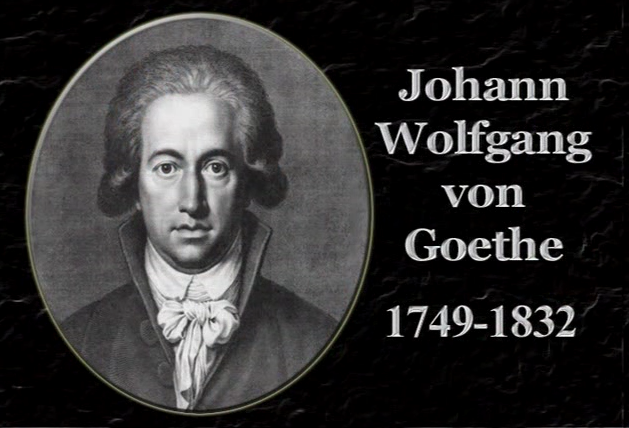
Goethe ranks with Shakespeare and Dante as one of the three supreme geniuses of European literature, comparable to Homer and Vergil from classical antiquity. Goethe’s genius was the most far ranging of all: poet, novelist, statesman, philosopher, and natural scientist.
The first part of Faust was published in 1808. In it, Dr. Faust appears like the Oedipus in Sophocles’s tragedy Oedipus the King. Faust is man intent upon knowledge at any cost. He will explore the whole of human experience, moving beyond all ordinary constraints of morality and religion. He will become like God, “knowing good and evil.” His tragic destruction of Gretchen is the triumph of supreme egotism over conscience.
Goethe, who lived from 1749 to 1832, is the genius of German literature. He is seen as the embodiment of the Age of Enlightenment, as well as the Romantic Age that followed it. Goethe was well educated and fluent in Greek and Latin.
Enlightenment thinkers believed that the man was a rational creature, and reason was key to man’s advance. Many thinkers of the Enlightenment believed that God had made the world, but men and women made their own destinies.
Philosophie, hélas ! jurisprudence, médecine, et toi aussi, triste théologie !… je vous ai donc étudiées à fond avec ardeur et patience : et maintenant me voici là, pauvre fou, tout aussi sage que devant. Je m’intitule, il est vrai, maître, docteur, et, depuis dix ans, je promène çà et là mes élèves par le nez. — Et je vois bien que nous ne pouvons rien connaître !… Voilà ce qui me brûle le sang ! J’en sais plus, il est vrai, que tout ce qu’il y a de sots, de docteurs, de maîtres, d’écrivains et de moines au monde !
Dr. Faustus was a real person who lived in Germany at the time of Martin Luther, probably between 1480 and 1540. Dr. Faustus had a reputation for not just wisdom but magical wisdom.
Faust declares that he wants really to live. Instead of studying, he wants money and women. The devil makes the bargain for Faust’s soul in return for giving the professor everything that he wants; he has Faust sign a contract in blood.
Johann Wolfgang von Goethe, Faust, Part 2
The second part of Faust, completed in 1831, explores the meaning of art for Goethe, the German nation, and his age. Can the art and literature of classical Greece provide the absolute model for Europe? Are the classical canons and forms absolute standards by which we measure our own cultural achievements? Is it the purpose of art to appeal to human reason? Or is it the purpose of art to appeal to our feelings and emotions, and must each new age and each people finds its own way, its own standards and criteria of beauty? The question of the role of beauty and cultural standards is one that every thoughtful person must decide on his or her own terms.
Chief among Enlightenment values was admiration for the classical cultures of Greece and Rome. People believed that the Greeks and Romans could be emulated but not surpassed; the models were the Iliad and the Aeneid. France was seen as the great modern example of culture, and cultivated people, including Goethe, frequently wrote and spoke in French.
From the new perspective of romanticism, men and women were creatures of impulse; the irrational plays an important role in human life. People can try to suppress their emotions under a veneer of reason, but the emotions will break free.
This course has examined several epic poems: the Iliad, Gilgamesh, Beowulf, the Aeneid, and The Divine Comedy. The epic has been the vehicle for some of the noblest ideas in literature.
Henry David Thoreau, Walden
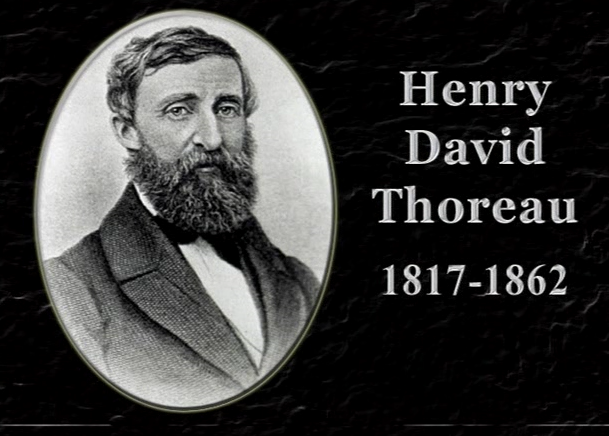
Is nature a source of wonder and revitalization for the soul, or is nature the servant of humans to be conquered and exploited? Are we one with nature or above it? The classical vision brings nature under control, order out of chaos. The Romantic reveres nature, untrammeled and untouched. Thoreau, the most American of thinkers, is an unabashed Romantic. Walden is the journal of his recovery of self-meaning and independence by his return to nature. It began significantly on July 4, 1845. Thoreau studies the life of nature with intense sympathy (2 years). Out of this comes a deeper understanding of the meaning of his own life. Walden is a profoundly individual story. I have found my own way, Thoreau says to us. Now you must find your way.
Thoreau went to Harvard, where he studied Greek, Latin, and natural and moral philosophy. He taught for a while, but realized that as a teacher, he never had an opportunity to learn. He then tried writing, but no one wanted to publish his material.
Thoreau considered himself a transcendentalist, as were several of his friends in Concord, including Emerson and the Alcotts. To transcendentalists, ideas were most important. This belief was similar to Socrates’s belief that ideas shaped everythinga philosophy opposed to that of most Americans, who believed in practical, empirical information.
Thoreau found he needed little to live. He discovered that all that was necessary was some kind of covering and something to eat, which he could produce himself. Although he was not a skilled craftsman, he built a small cabin, and grew his own food.
Thoreau would sometimes spend an entire day baking bread and watching it in the oven—or watching the grass—and contemplating. He found himself in a world filled with information. He believed that some people turned information into knowledge, but almost no one took time to contemplate and turn knowledge into wisdom.
Thoreau developed reservations about eating meat and fish. He found that he could obtain everything he needed to eat from his garden. Thoreau believed that God was more present in trees coming back to life than in cathedrals built by man.
Chaque matin est nouveau, frais. Vous pouvez commencer votre vie chaque matin.
Gibbon, Decline and Fall of the Roman Empire
Do we study history simply to learn about past events, or do we learn history to apply its lessons to our own day?
Second, is history nothing but a series of random encounters, leading nowhere, or is history a story that moves forward, even in fits and starts, toward a better world for the human race?
A History of Freedom, we explored Gibbon in the context of the ideas of freedom in the American Revolution. Here, we look at him and his history as a statement of “a philosophical historian,” who searches the past for laws to guide us in the future.
The democracy of Athens would have answered in the affirmative to these questions. The Athenians believed that Greek temples could achieve perfection. The Athenian democracy set out to build the Parthenon and make it perfection.
The founders of the United States were influenced by the past. When they wrote the Declaration of Independence and the Constitution, they studied classical antiquity for models of how republican and democratic governments had worked in the past.
The Decline and Fall of the Roman Empire was published between 1776 and 1789, the time of the Declaration of Independence, the War of Independence, and the Constitution of the United States.
The Roman people gave up their political liberty and transferred all real power to a military dictator, their emperor. The first emperor was Julius Caesar, who was followed by the great statesman Augustus. Caesar and Augustus created a new order that brought peace and prosperity to their world.
Gibbon begins his story of the decline and fall of the Roman Empire in the 2nd century A.D., in the age of the Antonines.
The Roman Empire was the only superpower in history until the United States. A superpower is defined as a nation that is absolutely dominant, militarily, politically, economically, and culturally.
Lord Acton, The History of Freedom
Determinism
Nationalism
Federalism
Cicero, On Moral Duties (De Officiis)
We rank him with Gandhi and Churchill as models of the whole person, a person shaped by the great books, a person of thought and action, who lived and died for his ideals. His book On Moral Duties is one of the most influential works on education ever written.
In 44 B.C., on Ides of March, Julius Caesar was assassinated. His assassins, Brutus and Cassius, as well as most of the conspirators, fled Rome.
In a series of ringing orations, Cicero attacked the character, policy, and intentions of Marc Antony. These powerful orations are called the Philippics.
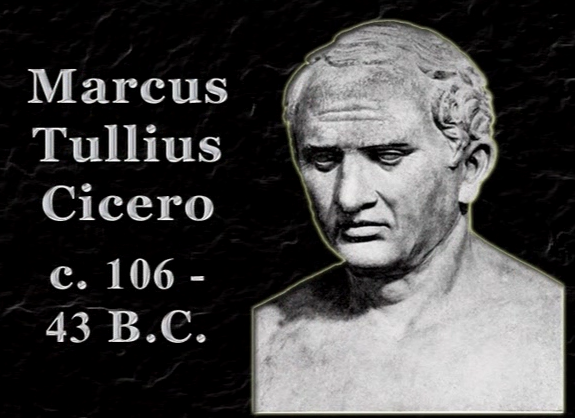
Like Plato, Cicero believed that God had established a set of absolute values, including wisdom, justice, courage, and moderation. These values exist even if they are denied in everyday life. An individual can
be good as well as successful. No dichotomy exists between morality and expediency (opportunité). An immoral act, such as lying or cheating, can never be helpful. No separation exists between the private and public selves. The highest possible calling for an individual is public duty.
The theme of De Officiis is that the basis of all morality and good actions is doing what is true and just and right; no dichotomy exists between doing what is good for oneself and doing what is right, because the individual can never profit from doing wrong.
Cicero was a success because he was true to himself.
Gandhi, An Autobiography
Drawing on the traditions of Indian thought and reading the Bhagavad Gita daily, Gandhi made his own path. Strong in the truth, he used moral power to bring a great power to its knees. Gandhi focuses on his entire life as a search for truth, teaching us that there are many roads to wisdom and many ways to fight the battles of life.
In 1893, a 24-year-old barrister, Gandhi, was representing an Indian company in South Africa. Although he had a first-class train ticket, he was not allowed to remain in the first-class seating compartment and was
thrown off the train. A stagecoach driver also refused to let him sit with the other passengers.
Gandhi decided to take on the scientific establishment, the legal system, and the power of the British Empire. Armed only with his belief in the truth and his concept of satyagraha, “steadfastness in truth,” Gandhi took on the empire and led his nation to independence.
Gandhi had a profound belief in God. He was greatly affected by the Bhagavad Gita and believed that God is truth, but more important, he believed that truth is God.
The Bhagavad Gita celebrates God as truth and teaches us to follow the path that God has laid out for us. It also says that doing the work of someone else is slavery, but doing the work of God is true liberation. The philosophy of the Bhagavad Gita began to shape Gandhi’s thinking.
In South Africa, Gandhi realized that God was telling him not to be afraid, to stand up and recognize the injustice around him as injustice to God, and to put an end to injustice. Gandhi came to the idea of ahimsa, “nonviolence.” This was not a passive idea. Great moral courage is needed to be nonviolent.
Indians had been required to buy cloth made in Britain. The cotton was grown in India, but it was shipped to England and made into cloth, then shipped back to India. Gandhi held mass demonstrations in which European-style clothes and cloth brought from England were burned.
The spinning wheel became a symbol of liberation—the wheel of life and a sign of God, with no beginning and no end.
Tolstoy’s The Kingdom of God Is within You opened a new world to Gandhi. According to Tolstoy, Jesus was not God but taught that everyone has a God within himself. A similar teaching also appears in the Bhagavad Gita.
Churchill, My Early Life, Painting as a Pastime, The Second World War
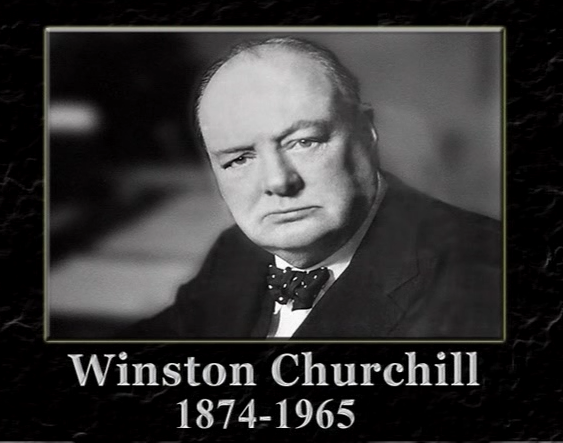
Churchill, we saw why this statesman might well be called the greatest figure in the 20th century.
Your lives are never over and we are never failures as long as we strive in a good cause. Take time for yourself and renew your spiritual being. You have a destiny. Find it. Evil is real and you must resist it
where you find it. But ultimately, be optimistic, for the world is becoming better and freedom will one day triumph.
Churchill played a role in the parliamentary debates of the 1920s and 1930s about Indian independence and whether India should receive dominion status.
Churchill believed that India could never govern itself.
In this book, Churchill says that at every stage of life, the individual must be willing to try something new. The greatest relief from stress is to take up a vocation that is different from one’s ordinary activities.
Churchill called World War II the “unnecessary war.” He believed that it would never have happened if Britain had shown the moral resolve to make the proper peace at the end of World War I. Instead, excessive reparations were exacted from Germany, and it was allowed to regain its power after being dishonored and humiliated.
Never give up!
Lessons from the Great Books
A great book can lead us from information and facts to knowledge and on to wisdom, the ability to apply information and knowledge to living our lives.
We have learned facts about their authors and the times in which they were written.
But our ultimate goal has been the search for wisdom.
It is a book with ideas that makes us better, better as individuals and better as citizens of a democracy.
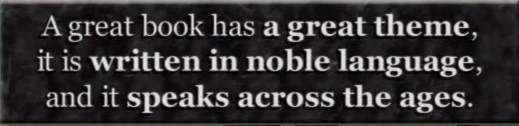
At the beginning, this course defined a great book as having a great theme, being written in noble language that elevates the soul, and speaking across the ages, that is, possessing universality.
Some books we have read in this course have made spiritual history.
The Iliad embodies values of a heroic age of honor, in which warfare was significant. That era was an age of the duel. The concept of honor cannot exist in a society that lacks the duel. Honor may be an outmoded concept. The age of Dante believed that all of life is preparation for death.
In What Is Art? Tolstoy says that a great book can be judged not only by the feelings that it arouses but by the quality of those feelings.
How do these books touch our lives? They touch us only if we are willing to use the wisdom that comes from these books to live our lives. That wisdom is broader than a set of values. It is an education for freedom; these great books educate us to live our lives freely and responsibly.
Wisdom is ultimately an act of meditation. We can come to wisdom only by sitting alone and thinking about what we have learned.
Reading a great book means sitting down with the book and allowing it to speak. It will speak to us only if we open our minds, which we can do only through meditation—the final step to wisdom.
We can all change our lives in small ways and in grand ways as long as we accept the fundamental premise that life is about the individual and as long as we are willing to learn, are willing to make mistakes and admit them, exhibit the ability to redeem ourselves—in an individual sense, not in a theological sense—and never give up. The ultimate lesson of the great books is to never give up. The individual must live his or her life and realize—as both Homer and Thoreau say—that every day offers an
opportunity to begin again.
 Domaines d'études