
Question 1: God. Does God or do gods exist?
- Is there a God?
- Is God responsible for all that happens?
Question 2: Fate. What is fate?
Question 3: Good and evil. What do we mean by good and evil?
Question 4: How should we live?
Plato, Phaedo
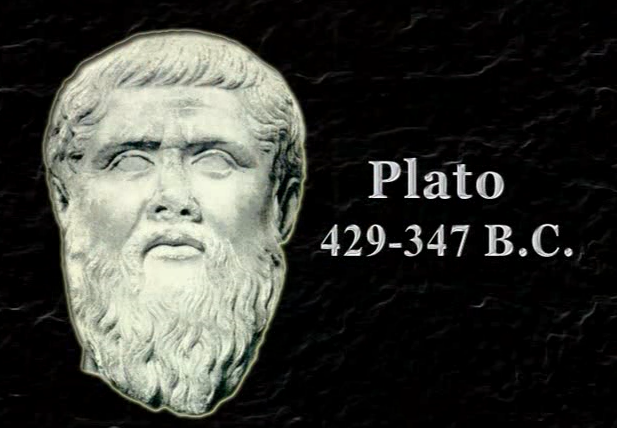
For Socrates, the belief in the immortality of the soul was the ultimate question. Plato portrays its centrality to the mission of Socrates in the Phaedo. For Socrates, only the immortality of the soul gives a cause to accept consequences for our actions. The immortality of the soul alone is the ultimate proof of absolute values, including truth, justice, and beauty. Yet after a life of searching for truth through logic and reason, Socrates comes to the final acceptance that the immortality of the soul cannot be proven; it can only be accepted as a matter of faith.
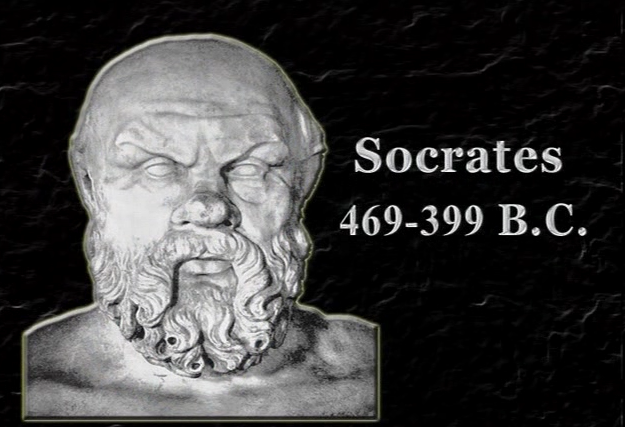
His trial, in 399 B.C. was a product of the war between Athens and Sparta.
In Plato’s Phaedo, Socrates presents his conviction that the soul is immortal and that belief in the immortal soul can give an individual guidance for life.
Socrates, like Jesus, never wrote a book. His student, Plato, left a series of dialogues in which Plato pays the highest tribute to his teacher by putting his ideas into the mouth of Socrates, thereby implying that without Socrates, Plato the intellectual would not have existed.
Socrates was a true philosopher, a seeker after truth and a lover of wisdom. He asked such questions as: What is justice? What is piety? What is God? What is good government?
He believes that a person who spends his life searching for truth and wisdom is doing nothing but
preparing to die. Death is the moment when the soul is liberated from the trials of the body, and the soul of a person who has prepared for death will go to the bliss of union with God, which is cause for happiness.
How do you know that your soul will continue after death and that actions have consequences? Socrates replies that the immortality of the soul is the basis for everything and is attested by the existence of absolutes, such as absolute truth, justice, good, and beauty. Thus, the soul existed before we were born and will exist after we pass away.
(Socrate dit que l’âme est immortelle parce qu’elle donne la vie. La vie absolue doit être le contraire de la mort absolue, et aucun absolu ne peut admettre en elle son contraire absolu. Par conséquent, l’âme doit continuer et elle doit être impérissable.)
The soul existed before you were born, how do you know that it will not die when you die? Socrates says that the soul is immortal because it gives one life. Absolute life must be the opposite of absolute death, and no absolute can admit its absolute opposite into it. Therefore, the soul must continue, and it must be imperishable.
Socrates states that he has come to understand that belief in this ultimate truth is just that—a belief. One cannot prove that the soul is immortal or that good or bad actions have consequences; one must make a leap of faith to believe it. He says, “If you do, fair is the prize and great is the hope, and it is in that hope that I can go happily to my death.”
« A quoi sert de se rendre sur la planète Mars, si on ne sait pas ce qu’il y a dans notre âme? »

« De vivre une vie pleine de haine, de vols, de trahisons, de mensonges, de colère amène une peur de la mort… par la noirceur de la conscience. Contrairement à celui qui fait le Bien, la conscience peut aller dans la Lumière! »
Thus, Socrates believes in consequences for good and bad actions and knows that God cares about good and evil. All people make their choices and will pay for them.
Dante, The Divine Comedy
Dante’s Divine Comedy is the most compelling and magisterial proclamation of the immortality of the soul and the belief that our actions have eternal consequences. The Divine Comedy is the supreme summary of the thought of medieval Europe.
« De croire à l’immortalité de l’âme fait diminuer la peur de la mort. Mais nous sommes souvent obsédés par le corps physique. »
« Après Constantin, il apparu une croyance en la résurection de la chair. »
In three parts, Inferno, Purgatory, and Paradise, Dante goes in search of wisdom. He finds ultimate truth
in revelation. But his search must begin in the underworld and with a new birth. Reason and the lessons of history can take him only so far in his pursuit of true liberation.
The Bhagavad Gita was written in approximately 500 B.C., more than 100 years before Plato’s Phaedo was written. According to this work, the goal of a wise man, that is, a seeker after truth, is to free the soul from the body to be joined in eternal bliss with God.
In Homer, after death, the soul descends into the underworld, where it leads a miserable existence. As Achilles says to Odysseus, “Better to be a slave in the world above than to be the king of the underworld.”
After the time of Alexander the Great, belief in the immortality of the soul became more important in the Greek and Roman world.
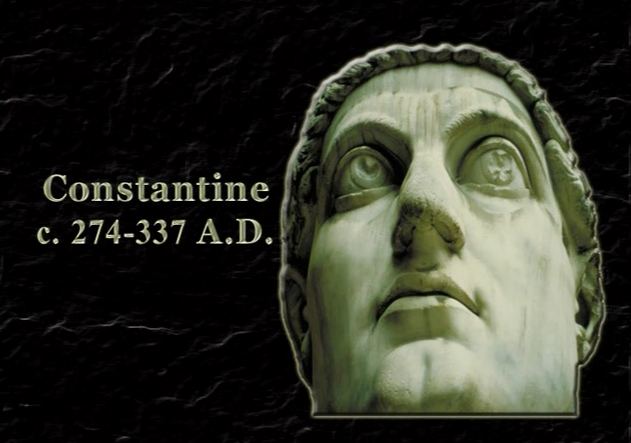
In 312 A.D., the Emperor Constantine, fearing for his immortal soul, converted to Christianity and imposed that religion on the Holy Roman Empire. Christianity rests on the belief of the immortality of the soul. The concept of the immortality of the soul was the foundation of Christianity in the Middle Ages.
The work has a monumental theme—the soul. Life is a comedy because—for those who believe—life ultimately has the happy ending of salvation. The Divine Comedy is written in pure and eloquent Italian, an
innovation for its day, when great works were usually written in Latin.
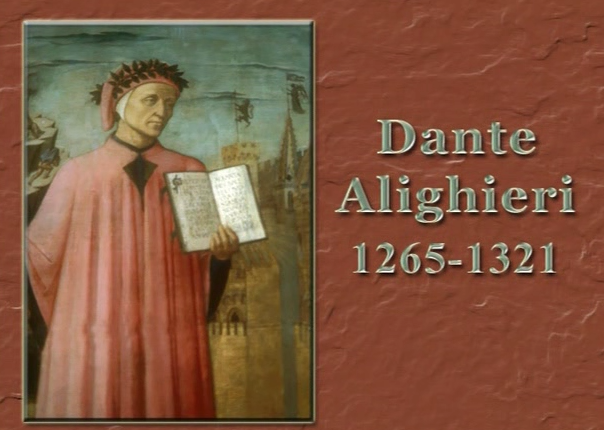
Dante Alighieri, “a Florentine by birth but not by character,” was born in Florence was a free nation, a city-state in Italy with its own popular government. Dante said that The Divine Comedy was composed not as an allegory but as a practical guide to salvation.
In the “Inferno,” Dante begins his journey in the middle of his life, in the middle of the night, in the middle of a dark wood. He is lost. He sees a great mountain and understands that he must climb it to leave the wood. Three beasts appear, blocking his path: a leopard, a lion, and a wolf. During the Middle Ages, every aspect of nature was believed to bear the imprint of God, and every tree and animal had a symbolic meaning: the leopard represented pleasure, the lion represented ambition, and the wolf represented greed (avidité)
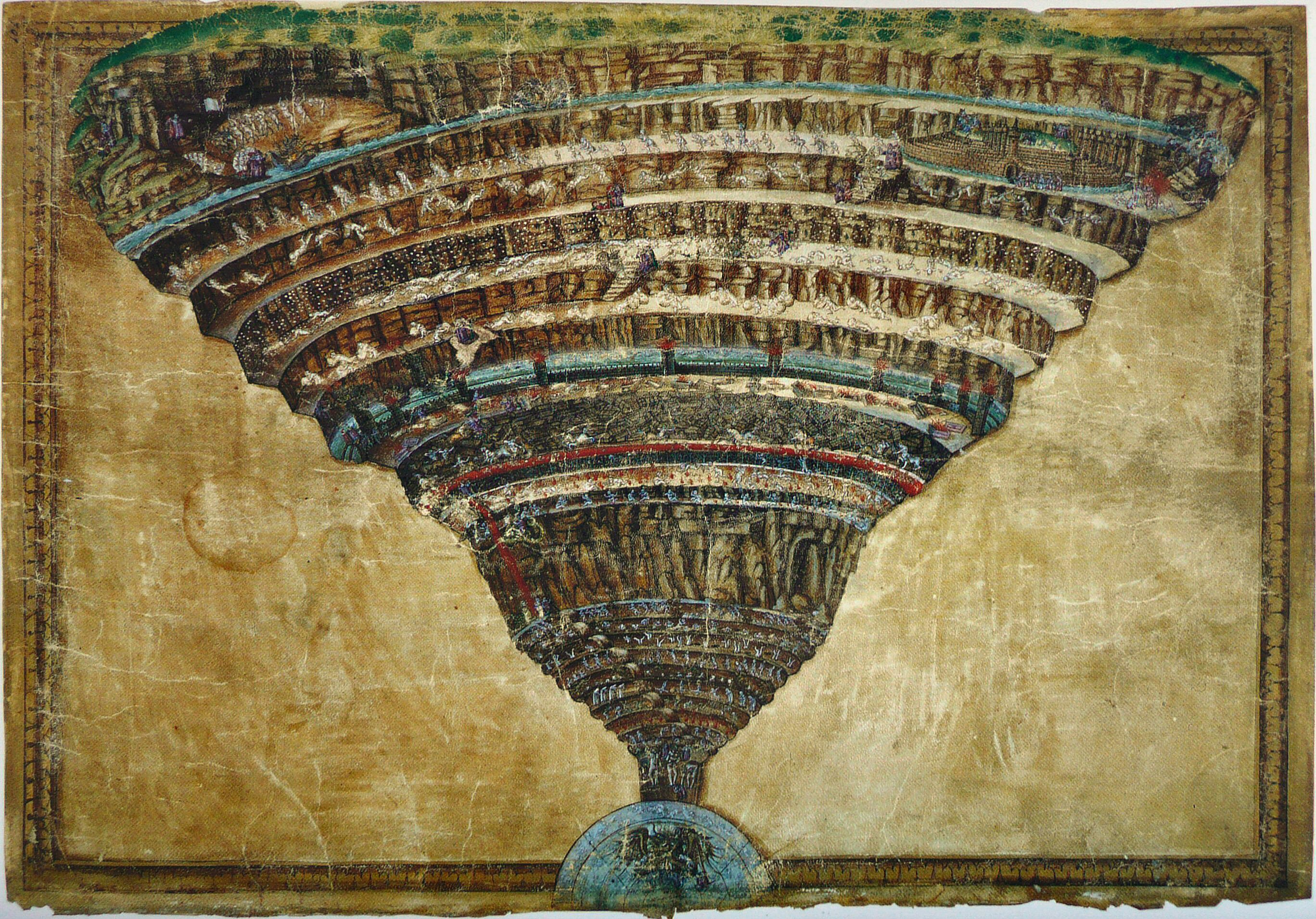
Dante encounters Vergil, the great Latin poet, whom Dante viewed as a master. The Christian Church regarded Vergil as a noble pagan, chosen by God to foretell the coming of Christ. At the outskirts of hell, Dante and Vergil encounter such noble pagans as Hector, Socrates, Plato, and Pythagoras. At the very deepest circle of hell is Satan, who is frozen in ice because that circle is the one that is most removed from the light of God. With Satan are the three arch-traitors: Judas, who betrayed Christ, and Brutus and Cassius, who betrayed Caesar. Step by step, Vergil and Dante climb upward through Purgatory. At the top of Purgatory is the Garden of Eden.
Dante is escorted through heaven by three women. His first guide is Beatrice, whom Dante loved in purity. His second guide is St. Lucy, the patron saint of light itself. His third guide is the Virgin Mary.
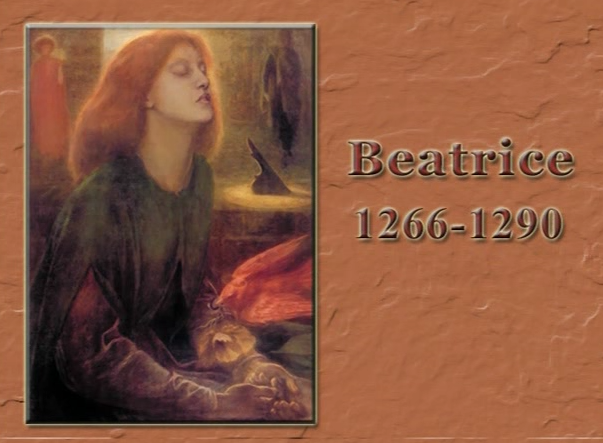
Dante emerged from his experience to bring back the message of the love of God. This work is a deeply religious one, written by a man who had suffered profoundly and who knew that he had been wronged. Out of his misery, he produced The Divine Comedy, a work of profound inspiration, philosophical depth, and unsurpassed beauty in its language.
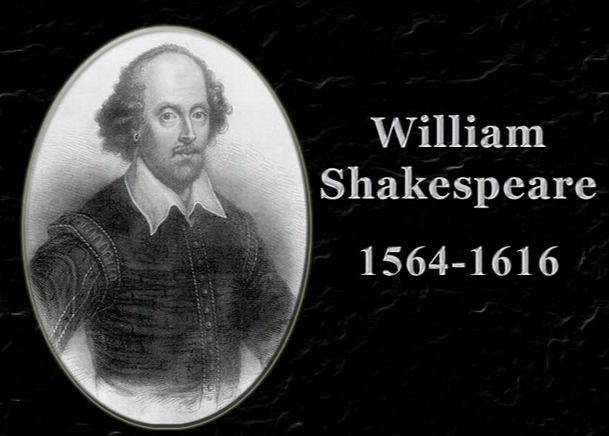
Shakespeare, Othello, the Moor of Venice
« Écrit à une époque extraordinaire: Elizabeth I, exploration de l’amérique, combats contre l’Espagne en mer, propagation des Protestants, Martin Luther, Roi Charles I, premières traductions de la Bible. »
The ancient Greeks and Romans did not have a figure comparable to Satan or the devil. To them, evil came in the form of human actions. In Renaissance England, this same idea was portrayed magnificently in Othello. The tragedy was written in 1604, at the height of Shakespeare’s creative powers.
Othello, a North African Muslim converted to Christianity, is a general of the Venetian Republic. He achieves his ambitions, both in public and private life, in his appointment to lead the armies of Venice against the Ottoman Turks and in marrying the beautiful Desdemona. Their lives and the lives of others are destroyed by the jealousy and false ambition of Iago, a petty and spiteful man but capable of great evil.
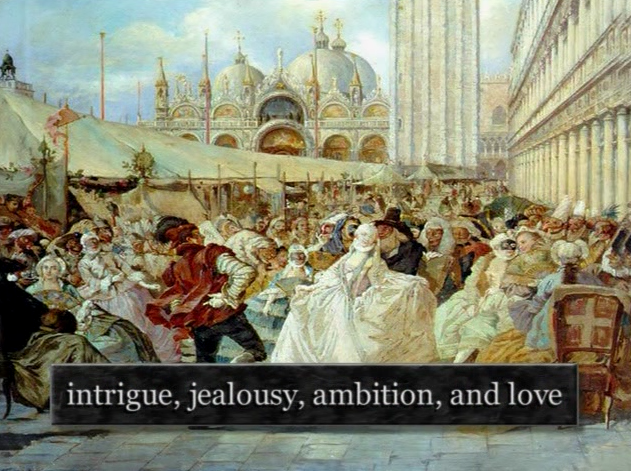
The themes of Othello are intrigue, jealousy, ambition, and love, rather than God, religion, and the immortality of the soul.
No God is working behind the scenes in Othello. Shakespeare’s play deals with real human nature and real human figures.
That is the tragedy of Shakespeare. In Shakespeare, we see humans continually making the same mistakes, unable to learn from them.
Shakespeare, the greatest English writer of tragedy, shows us in Othello the tragic fall of rather ordinary people, people who, with a change of costume, we might meet in our professional lives today.
Aeschylus, Prometheus Bound
The age of Greek playwrights—Aeschylus, Sophocles, and Euripides —is concurrent with the Athenian democracy of the 5th century B.C. and its grand period of empire.
Aeschylus, like the other great Greek tragedians, believes that we gain wisdom from those who suffered on a titanic stage. Prometheus is the great rebel, who in defiance of the will of Zeus, has brought noble
benefits to the human race. Prometheus is the eternal symbol of those who fight evil in a just cause. Prometheus accepts the terrible consequences of his actions. Zeus has violence and power on his side.
But Prometheus has knowledge and courage. In the end, he will win, and it will be Zeus who gains wisdom from the suffering of this rebel.
Athenian society was based on democracy, the liberty to live life as one chose, and the political involvement of ordinary citizens.
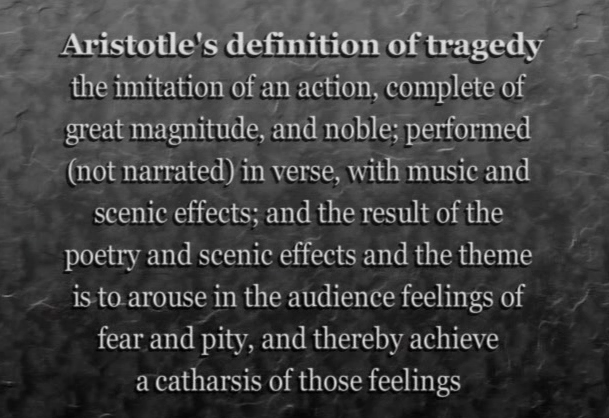
Aristotle wrote The Poetics in the latter part of the 4th century B.C.; however, it reflects his thoughts regarding the great poets of the previous century—Sophocles, Aeschylus, and Euripides. In it, Aristotle provided a definition of tragedy: A tragedy is an imitation of an action that is complete, of great magnitude, and noble. The tragedy is performed, not narrated. It must be performed in verse with music, and performances must include scenic effects.
Winston Churchill defined a tyrant as a person who believes that his own comfort, ideas, and policies are worth the sacrifice of millions.
Zeus believed that his own ideas were worth the sacrifice of millions of innocents and decided to destroy the human race. Prometheus intervened and saved humanity by giving to humans the arts and sciences that enabled them to cultivate the divine and protect themselves. He gave the human race everything that made people reasoning creatures. He taught people how to grow crops, write, understand the divine, read the signs of oracles, make sacrifices, sail, and domesticate wild animals.
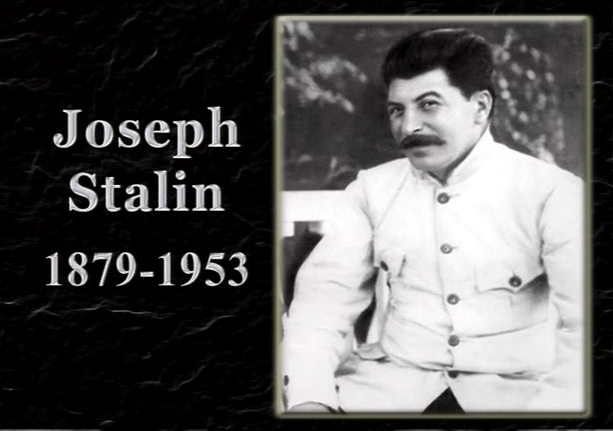
In his book 1984, George Orwell defined power as “the ability to inflict pain and humiliation.” This definition was as true in 5th-century Athens as it was in Nazi Germany or under Stalin in Russia.
Aleksandr Solzhenitsyn, The Gulag Archipelago
Honneur. Devoir. Responsabilités. Conscience.
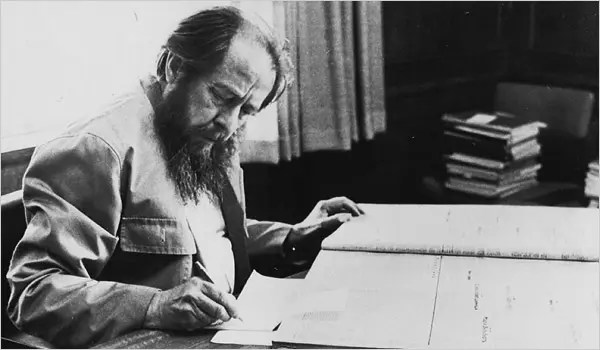
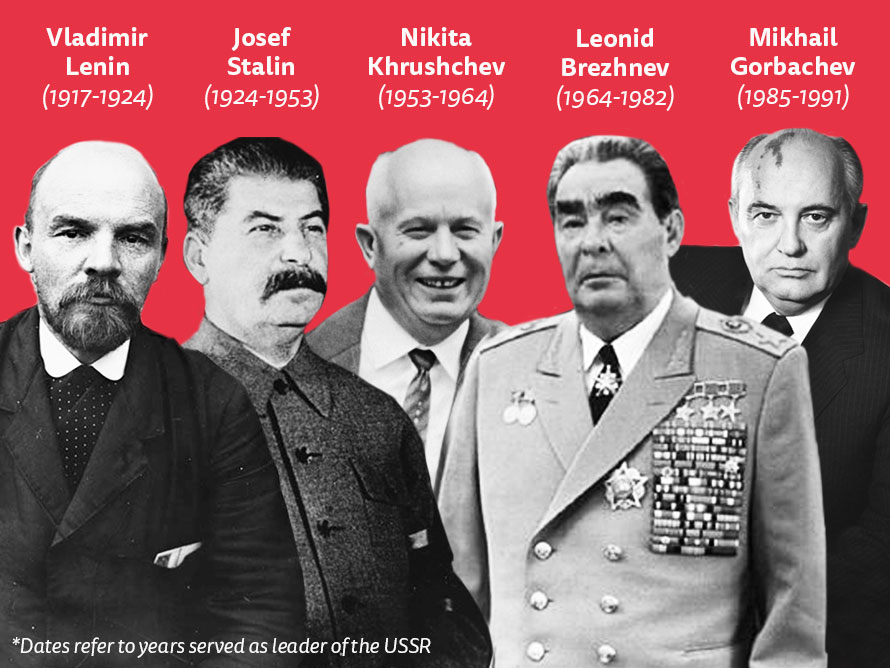
Adolf Hitler and Joseph Stalin seem the most compelling proof for the existence of absolute evil.
How do we know what our duty is, and how do we decide what is right? Does the modern age even permit a true concept of conscience? Are modern society and the modern state so powerful that they destroy any concept of conscience?
In February 1945, Solzhenitsyn was a captain in the Soviet Army. He had been made a captain because of extraordinary bravery in the field. Agents refused to tell him why he had been arrested, although his colonel conceded “You have a friend, I believe, on the Ukrainian front,” a small act of conscience in an effort to stand up to Stalin’s destructive machinery of state. Solzhenitsyn was sentenced to eight years in a labor camp.
Solzhenitsyn had wanted to study the classics. He had not been allowed to do so and instead studied mathematics. He wrote in secret while teaching math and chemistry in a local high school. The result was One Day in the Life of Ivan Denisovich, a poignant and penetrating account of life in the labor camps; he sent the manuscript to a publisher.
In The Gulag Archipelago, Solzhenitsyn described the interrogations and the brutality of guards who did not want the truth but a confession. He described how this system had started under Lenin and was fundamental to socialism, which must rule by terror because it denies a basic human right, the right to property.
Communism rests on the belief that because there is no God, there is no absolute right and wrong.
Honor, duty, and responsibility are central to the way we live our lives if we wish to live them as thoughtful individuals.
Shakespeare, Julius Caesar
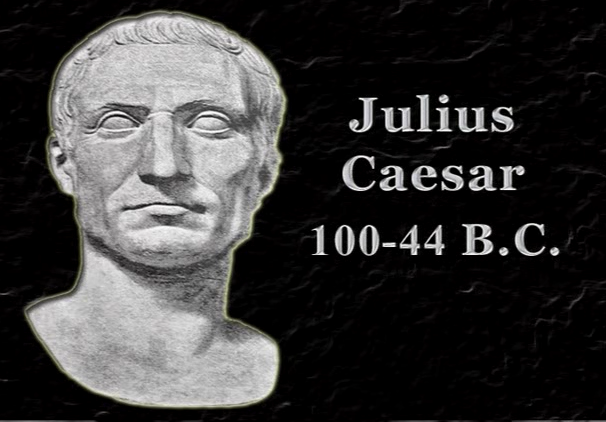
Julius Caesar was written at the height of Shakespeare’s creative talents. Its theme is honor and duty, the duty of a man to resist evil by violence and murder if necessary. To Brutus, Caesar is evil. He is the most dangerous type of tyrant. He is not personally cruel. He does not rob or torture his enemies. In fact, he treats them with clemency. Caesar is evil because he is destroying the political liberty of the Roman people. But Shakespeare understands human nature far too well to make this tragedy into a simple morality play. The motives of all the conspirators, including Brutus, are complex and cloudy. The consequence of their assassination of Caesar is not the restoration of liberty but further death and destruction for their country and the emergence of a new tyrant.
Honor is the central theme of Julius Caesar. It was first produced in an age that took the concept of honor seriously. Julius Caesar was first produced in 1599.
Honneur. Devoir. Justice. Ambition. Courage.
Julius Caesar composed works of history, his Commentaries, to describe his victories in Gaul; these are the finest examples of Latin prose ever written. He was a military genius who did not begin to command until he was 39 years old and then never lost a battle.
Shakespeare was not in favor of democracy; he did not believe that ordinary people had the sense, good will, or values to govern themselves.
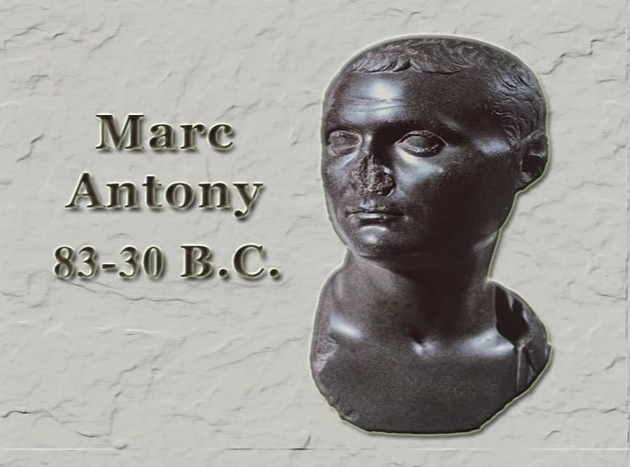
Brutus also says that he loves “the name of honour” more than he fears death. Cassius appears jealous of Caesar and makes honor the theme of a speech to Brutus in an effort to enlist Brutus in a conspiracy to assassinate Caesar.
George Orwell, 1984
Devoir. Responsabilités. Honneur.
The Oceania of Big Brother is the embodiment of the idea that the individual exists to serve the state. Indeed, the individual has no meaning. The state or the party controls all aspects of human existence, all thought, all language, all action.
George Orwell’s 1984 continues our discussion of the themes of duty and responsibility and how we live our lives with a sense of honor and a sense of conscience that require us to speak out about what we know to be our duty and to do what is honorable.
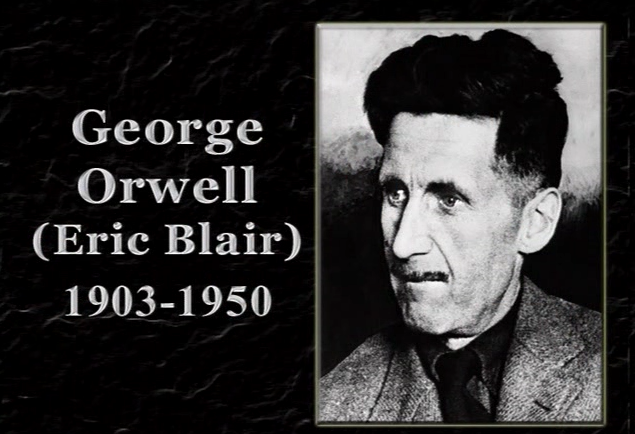
George Orwell was the pen name of Eric Blair, who was born in 1903 and educated at Eton.
The novel 1984 was published in 1948. In the book, Orwell portrayed the new age under a totalitarian regime. Stalin is the basis for Orwell’s depiction of Big Brother. Throughout 1984’s city of London, and across the continent of Oceania, Big Brother is watching. He is a handsome, middle-aged man with a heavy black moustache. The phrase “Big Brother is watching” is not itself terrifying, but Big Brother cannot be escaped.
« Ces drames se produisent en Avril, au Printemps, Pâques, symbole du renouveau, renaissance. »
The first name of Winston Smith reminds the reader of Winston Churchill—a man of duty, responsibility, and honor—who rallied the British people to stand and fight totalitarianism. The last name Smith, the most common name in the English language, transforms Winston into Everyman, taking a stand for what is right, but that task is not easy in the world of 1984.
In 1984, the earth is divided into three great powers: Oceania, where the story takes place, consists of Britain and North and South America; the other powers are Eurasia (Russia) and Eastasia (China). In Oceania, the government tightly controls all sources of information, so the people of Oceania do not truly know what is going on in Eurasia or Eastasia. Information is not lacking, however; the people of Oceania are constantly flooded with news.
Thought is also controlled. The thought police are the most dreaded instruments of control. They operate from the Ministry of Love. Winston Smith’s job at the Ministry of Truth is to fabricate history, because one slogan of the Party is that he who controls the present controls the past and he who controls the past controls the future.
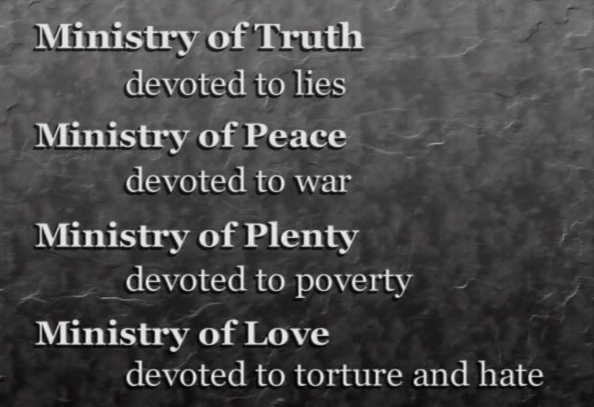
In 1984 in Oceania, there is no truth. Truth is whatever the Party says it is. God has been officially banished, as in the Soviet Union. There is also no absolute good or evil.
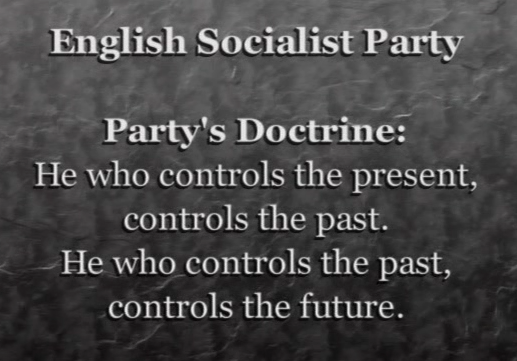
« Si vous possédez le pouvoir, vous pouvez réécrire l’histoire. Et par ce pouvoir, vous pouvez indiquer aux futures générations quoi penser de ce qui est arrivé. Pour plusieurs enseignants d’histoire, l’Histoire est une question de PERCEPTION. »
« L’histoire est écrite par les vainqueurs . » Avec cette formule, le journaliste et écrivain Robert Brasillach«
In Oceania, people are told that ignorance is strength, war is peace, and slavery is freedom. The people must be willing to accept these paradoxes. To survive in the Oceania of 1984, one must practice and be convinced of doublethink, the ability to hold in one’s mind two completely contradictory ideas and believe them both sincerely.
One evening, Winston notices that the clock on the wall shows one time, but the shadows outside indicate a later time. A voice says, “Stay where you are. Here comes a lantern to light you to bed. Here comes a chopper to chop off your head.” The thought police then break in to the apartment
Chaque maison possède son écran qui martèle LA Vérité de l’État, qui indique à chacun quoi faire, quoi penser en tout temps.
Winston and Julia are taken to the Ministry of Love, where O’Brien interrogates and tortures Winston until he believes that 2 + 2 = 5 if the Party says it does. Power is the ability to inflict pain and humiliation on another. Winston, the man of honor and courage, understands what the individual can do in the face of such overwhelming power—nothing.
Vergil, Aeneid
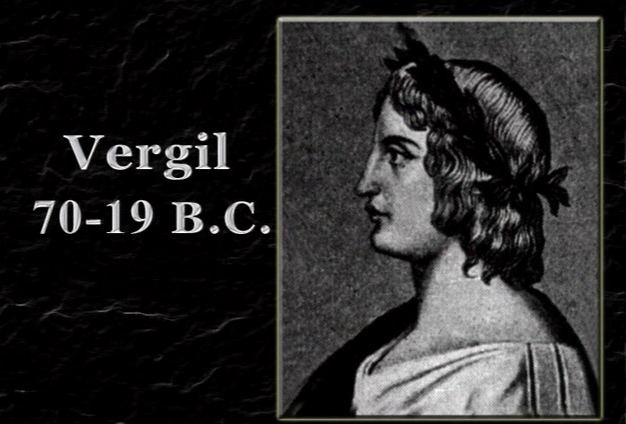
The Aeneid is the embodiment of the ideal of a great book. It is an epic about the moral value of duty. Its theme is civic virtue, the willingness of an individual to subordinate his own interest to the good of the community as a whole. Aeneas is pius because he chooses to serve his nation, and in that service, he fulfills his divine destiny. That service forces him into war—a civil war—a war he does not want. But through the leadership of Aeneas, his nation is reborn, and he achieves immortality.
Vergil’s Aeneid tells about another age of civil war, destruction, and widespread hopelessness from which the entire world was saved by one man who did his duty. That man was Gaius Julius Caesar Octavianus, known to the world as Augustus.
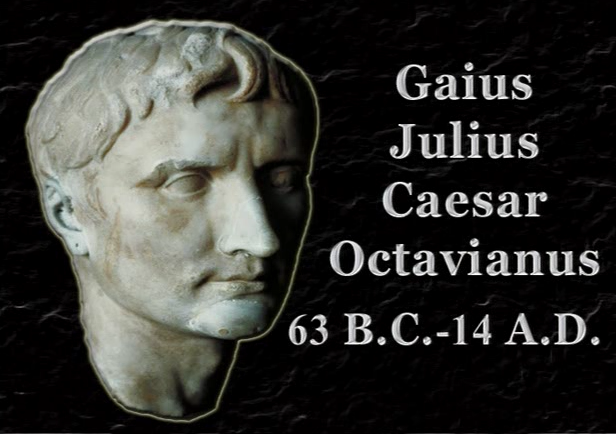
The Aeneid was written by Vergil, the greatest poet of his day, who was born in 70 B.C. and came of age in the turmoil that preceded and followed the death of Julius Caesar. He had witnessed the Roman
world brought to political and economic ruin by self-satisfied politicians who sought only their own best interests.
Augustus urged Vergil to write an epic poem that would celebrate the founding of Rome and would portray in allegorical form the struggles that Augustus had undergone in his efforts to bring peace and
prosperity to Rome. The Augustus of Rome is found in the person of Aeneas.
Christians regarded Vergil as a “noble pagan” who had foretold the coming of Christ.
The book has two grand themes: The first is the founding of Rome, and the second is the theme of duty and the requirement that the individual do his duty no matter what the cost.
The poetic language of Vergil is unsurpassed.
The Aeneid is a deeply religious work. This poem takes seriously a belief in God and the divine mission given by God to a man and to a nation. Troy has fallen, Aeneas has lost his wife, and he has lost his nation. He is set adrift with a small remnant of the population of Troy. They are pursued by Juno, the wife of Jupiter.
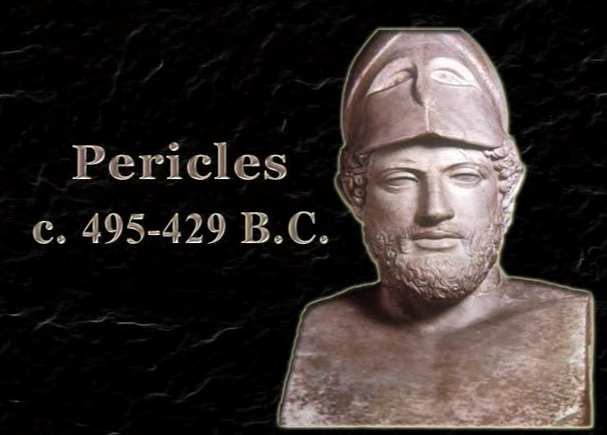
Pericles, Oration; Lincoln, Gettysburg Address
Do we fight evil, or do we tamely submit? If we choose to fight evil, do we use the weapons of evil, such as force, to win our fight? War is the ultimate conflict resolution. Patriotism is one of the most enduring of human values. In many ages and many great books, we are told that to die for one’s country is the noblest deed. That question is as alive today as it was in history’s first democracy, Athens of the 5th century B.C., or in the America of Abraham Lincoln. Two great democratic statesmen, Pericles and Lincoln, used the occasion of a public funeral for the war dead to proclaim that democracy is an absolute good. Nations that are based on government of the people, by the people, and for the people must be preserved. To die in that cause is the noblest of deaths. Separated by almost 2,500 years, these two funeral orations represent the most profound statements of the necessity of just wars.
The Aeneid, a magnificent work of Latin poetry, has influenced each succeeding generation of European literature. The Aeneid is a statement of the Roman ideal of the mission of the Roman nation: to lead the world to a new era of peace and prosperity and to unite the world under Roman rule. According to Vergil, the mission of the Greeks was to create art and science, whereas the mission of Rome was to conquer the arrogant and lift up the weak. Finally, the Aeneid is a poem about war.
The poem starts with the consequences of the Trojan War and the destruction of Troy. It concludes with a war that Aeneas and the Trojans did not want, that was forced on the Trojans in Italy. As a result of that war, Italy was united and a new Rome was founded.
The generations that fought World War I and World War II believed that they were fighting the war to end all wars. Great democratic statesmen have led their nations to war in the belief that a greater good would be served.
Both Pericles and Lincoln possessed the four qualities that distinguish a statesman from a mere politician.
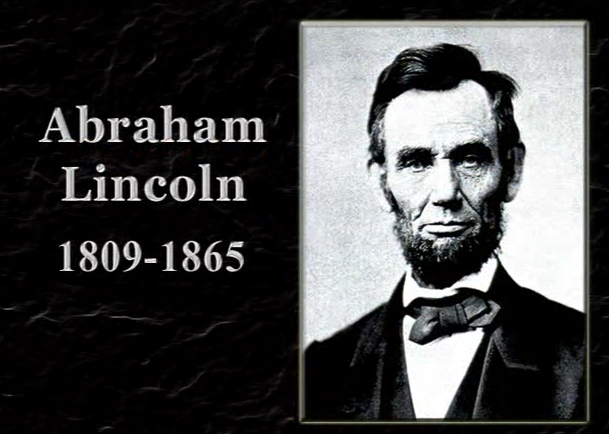
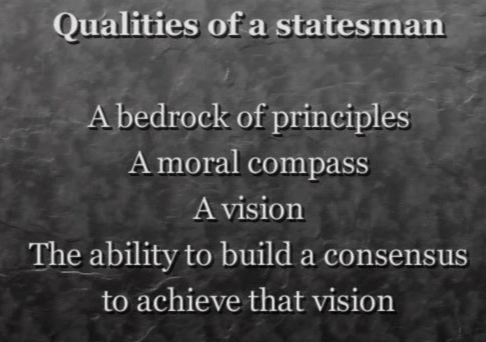
- Both Lincoln and Pericles based their principles on democracy, that is, a government of the people, by the people, and for the people.
- Each man possessed a moral compass that guided him through life. Each had a sense of absolute right and absolute wrong.
- Lincoln and Pericles each had a vision of his nation as a model for the world and the best hope for humankind.
- Both had the ability to build a consensus to achieve that vision. They were master orators who used the spoken word to rally their countrymen and to lead them to understand why war was necessary.
Both Pericles and Lincoln led their nations into great civil wars. The war between Athens and Sparta from 431 to 404 B.C. was a civil war.

he American Civil War ended slavery and determined that Americans are, first and foremost, citizens of the United States rather than citizens of their own states.
The United States must have a new birth of freedom, and it must be under the will of God, who created all men equal.
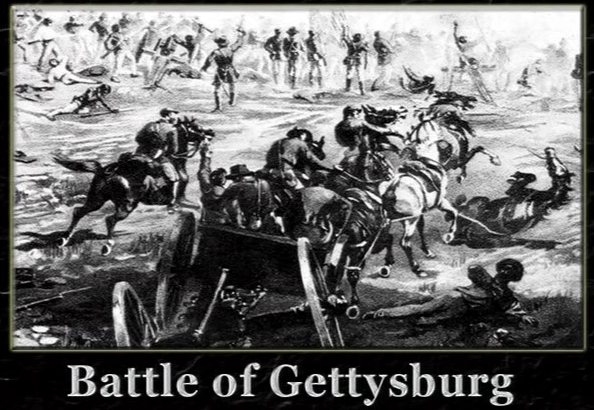
Réflexion: Lincoln apporta une dignité à la cause des morts au combat, Noblesse de Mourir au combat pour son pay, pour la Liberté. Cimetières militaires, terres sacrées pour la Liberté, pour l’Égalité entre hommes. Contrairement à la guerre au Vietnam & Irak.
Remarque, All Quiet on the Western Front
It can be argued that politicians and poets know nothing of war. Only the combat soldier understands the horror of war. Published in 1928, All Quiet on the Western Front is a powerful novel filled with
characters we care about and written in a forceful, compact German style, reminiscent of a German Hemingway. It is the best novel about war ever written. It portrayed the terrible anonymity of modern war and influenced a generation of European youth, who in England swore “never again to fight for king and country.”
The generation that grew up in the years before 1914 was taught that dying for one’s country was indeed noble. Boys were educated to be patriots and were told of the glory of war. Men marched off in August 1914 eager to have a chance to fight for their country. They worried that the war would be too short for them to see action.
After four wars of World War I, many of those who survived were convinced that the most foolish thing one could do was to die for his country.
After World War I, many people at all levels of government believed that no war was worth its cost.
Because English and French politicians were too weak and because the public believed that the war was a terrible mistake, the world found itself 30 years later in a more destructive war that would cause the deaths of 50 million people.
Churchill called World War II the unnecessary war because people failed to recognize that stopping aggression when it first appears is less costly than waiting until after it has grown.
Confucius, The Analects
Confucius was a teacher who sought to educate the whole of his students, based on the ideal that each student is an individual, with individual needs and abilities, and that the purpose of education is to make us better, better as individuals and as citizens. The teachings of Confucius were as revolutionary in 5th-century China as were those of Socrates in 5th-century Greece. For Confucius, the whole of an ethical life can be summarized by “doing unto others as you would have them do unto you.” True education is the development of the individual’s conscience. The highest calling is to be true to your conscience, to your true moral nature, which is good.
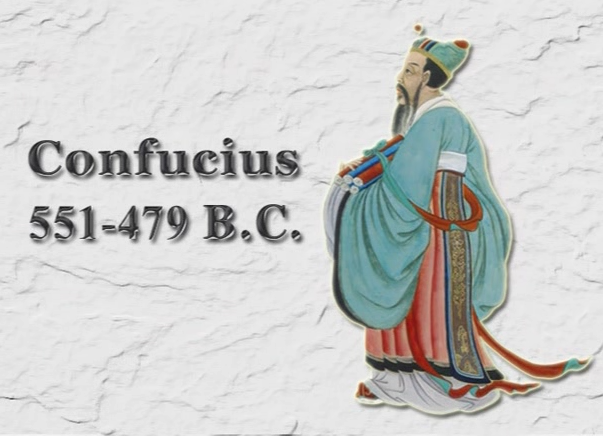
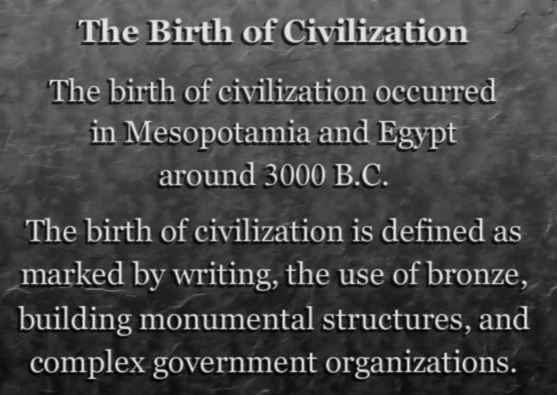
A central theme of this lecture is duty, how Confucius described it, and how he taught it to his students. A second theme is education, the process by which people learn their duties, and the role of a great teacher in that instruction.
Confucius was born in 552 B.C. in the principality of Lu in China. At one time, Confucius had 3,000 students. His inner circle of disciples has passed on what we now know about him. Like Socrates and Jesus, he never wrote a book. His students gathered his wisdom into a collection of sayings.
No person could begin on the path to wisdom without knowing the odes, poetry that speaks to the soul.
The followers of Confucius were expected to follow the Tao—the way that is the truth. Confucius spent his life in pursuit of the truth. Confucius divided his life into a series of stages.
- At the age of 15, he began his studies.
- At the age of 30, he took his stand. By this he meant that he decided to devote his life to the search for truth.
- At the age of 40, all his doubts were put aside, that is, he began to understand the way and knew that he must follow it.
- At 50, Confucius understood what heaven had decreed for him.
- Confucius never talked about the gods. The divine plays almost no role in his teachings; he believed that people can find their way without invoking the gods.
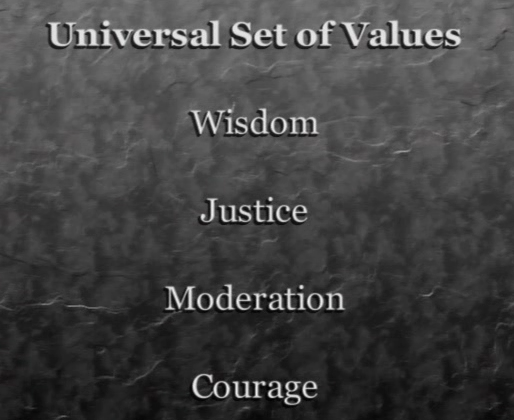
The path of good is marked in our character by wisdom, courage, and justice.
Both Confucius and Socrates were philosophers who labeled themselves as searchers after truth. They both saw the search for wisdom as the way to truth. Jesus, who was recognized in his own day as a teacher, also engaged in this search for wisdom as the way to truth.
Jesus, Socrates, and Confucius were united in their messages. They believed that the true teacher is a moral guide and that the true purpose of education is to make the individual a better person.
The three teachers also shared the notion of redemption. They believed that people can make many mistakes in life, but those who stay on the path will, in the end, be justified. They were willing to admit
contradictions and give every individual a chance to change and learn. Both teachers and students must be willing to grow intellectually. For Confucius, the real key to life was encapsulated in his stages of
learning.
Machiavelli, The Prince
Confucius taught the art of government as it should be. Machiavelli taught government as it is in fact. Written in 1513, The Prince might be called the handbook of modern politics and foreign policy. It is as
applicable today as it was in the age of such Renaissance tyrants as Cesare Borgia, and it is as useful to corporate CEOs as it is to politicians. Machiavelli is concerned with power, how to get and how to keep it. Power is everything. It is the possession of power that matters, not using power for any good purpose. The ruler governs for his own benefit, not for the benefit of those he rules.
His historical examples are chosen to show that the most successful tyrants are frequently men of mediocre ability, who focus on power and are utterly ruthless in its pursuit. The lesson was not lost on
Stalin or Hitler.
Il Principe is generally translated as “The Prince,” but a better translation would be “The Leader.”
Socrates was influential because he laid the foundation for the intellectual framework that we call the ideal of the university; Jesus laid the foundation for Christianity, and Confucius laid the framework for the civilization of China. Machiavelli did not transform people’s thinking—he described people as they were. The lessons of Machiavelli are written throughout history.
Machiavelli believed that power is what people want and that people will do anything to obtain it.
Hitler said that The Prince was the most influential work he had ever read and that he often turned to it for guidance.
Machiavelli was born in Florence in 1469 and died in 1527. Machiavelli lived during the time of the Renaissance in Italy.
He came to believe that history could be used as a tool to understand the present.
In 1512, a sudden change occurred in the politics of Florence. The mercenary armies of Pope Julius II conquered Florence, the Florentine government was forced to give up its republican constitution, and the de’Medici family was reinstated in a dictatorship.
The theme of The Prince is power—how to get it and how to keep it. An individual can learn how to obtain and maintain power through the lessons of history—both immediate history and the histories of Greece and Rome.
In this step-by-step instruction book for being a dictator, an important step is knowing what one wants to be a dictator of. A dictatorship, by its character, must be a monarchy, ruled by one person. The three types of monarchies are hereditary monarchies; mixed monarchies, in which the monarch expands an existing hereditary monarchy; and newly won monarchies that the monarch rules by himself as an innovator.
The person who wants to rule must have an army. A professional army is not loyal; its soldiers serve only for money, and the leaders are interested in protecting their investment, that is, their men.
The dictator does not want power so that he can do good things. He wants power for its own sake. The leader must be cruel. Being hated and feared is better than being loved. The ability to lie is a key to success. The leader should never keep a promise unless it is convenient. The followers must be
flatterers, but the leader must be able to judge this flattery.
 Domaines d'études